
 Share on Bluesky
 Share on X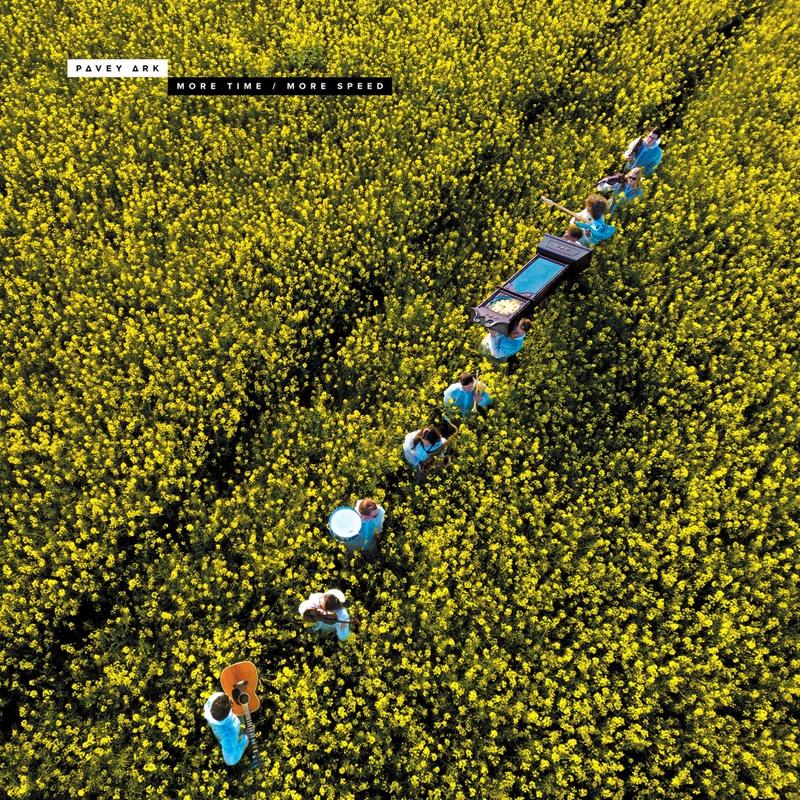

If anything counts for momentum in the currently artist-hostile environment of creation and performance, then Pavey Ark surely have it.
One of the most striking differences between the musics of the 20th and 21st centuries is the lost tradition of being able to give something a specific geographical root.
Way back when you had Blues from Chicago (or latterly house), soul from Detroit, or country from Nashville.
It kinda worked too in Britain, although not as precisely with the likes Merseybeat and 2-Tone, but with the advent of file sharing and communities going mostly online, immediately associating a certain kind of sound with a place is very much a thing for the older parts of a family tree to remember.
On the flipside, these decaying bonds mean that when a new record majoring in both folk and Americana arrives which was made almost entirely on a farm in the north of England, nobody really cares to raise any doubts about the authenticity of the claim.
Said record is More Time More Speed by Pavey Ark, who come from the distinctly undusty winding roads of Hull, a city almost on England’s east coast.
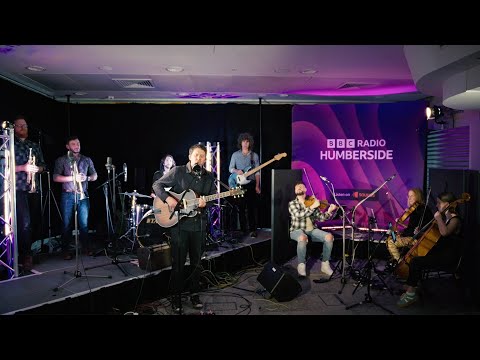
Once a solo project of Neil Thomas, Pavey Ark’s line-up has grown seemingly by osmosis over the last seven or eight years, with the latest additions being a horn section to add to the strings and other more traditional instruments.
A debut album, Close Your Eyes And Think of Nothing, was released in 2020, but it’s more recently that the group’s profile has grown, with appearances at the Cambridge Folk Festival, Glastonbury and most recently SXSW in the spring of 2025.
If anything counts for momentum in the currently artist-hostile environment of creation and performance, then this is surely it.
Clearly of the school of thought which believes in making your own luck, Thomas brought in Adrian McNally of The Unthanks and The Bees’ singer Paul Butler to co-produce More Time More Speed, the latter using outboard analogue equipment to bring warmth and space to the arrangements.
What makes the collective outcome more fascinating is that the recording studio was an ad-hoc facility located on a working farm with activity run to a tight schedule as the cows were milked regularly and too noisy in doing so to soundproof out. They are not amongst those credited.
In places, this oddest of pooled circumstances makes for something close to magic. Opener Out Of Time, with its gently rolling drums and rustic guitar surfs the space between Calexico or the work of Zach Condon, a song of substance made from it seems nothing much at all.
There is a sense of remorse present too, the plaintive Yesterday Is Done beginning with the phrase, “I’m Sorry”, as Thomas offers up contrition for absence from moments and the memories they otherwise created but then sets them in the context of a new beginning for the band.
Elsewhere, The Go Slow – which owes a passing debt to Radiohead’s No Surprises – reaches out into the light after a long period in hibernation, a nod to the dead ends and loneliness that were gradually thawed at the end of the pandemic.
These notions are feather light however, such that the outstanding Epoch, which considers man’s impact on the world around it, sounds almost giddy, a violin and brass taking the listener to a place strangely beyond condemnation where only things as they are were even yesterday can’t be changed.
Do places need music to be themselves? In Pavey Ark’s world the desert, the river and the mountain are all places you can journey to.
Satisfyingly vagabond, More Time More Speed calls home anywhere.
Related news:



 Fcukers – Ö: Album Review
  The Boxer Rebellion – The Second I’m Asleep: Album Review
  The Twilight Sad – It’s The Long Goodbye: Album Review
  The Orielles – Only You Left: Album Review
  The Sophs – GOLDSTAR: Album Review
  James Adrian Brown – Forever Neon Lights: Live4ever’s Inside Track
  Live4ever’s Best Of 2025: The Albums
  Live4ever’s Best Of 2025: The Tracks
  Sydney Minsky Sargeant – Lunga: Live4ever’s Inside Track
  Lathe Of Heaven – Aurora: Live4ever’s Inside Track
 -
 David Byrne live at Teatro degli Arcimboldi, Milan: Gig Photos
-
The Last Dinner Party live at Fabrique, Milan: Gig Photos
-
Wolf Alice live at Leeds First Direct Arena: Gig Photos
-
Water From Your Eyes live at Arci Bellezza, Milan: Gig Photos
-
The Hives live at Factory International, Manchester: Gig Photos
 David Byrne live at Teatro degli Arcimboldi, Milan: Gig Photos
  The Last Dinner Party live at Fabrique, Milan: Gig Photos
  Wolf Alice live at Leeds First Direct Arena: Gig Photos
  Water From Your Eyes live at Arci Bellezza, Milan: Gig Photos
  The Hives live at Factory International, Manchester: Gig Photos