
 Share on Bluesky
 Share on X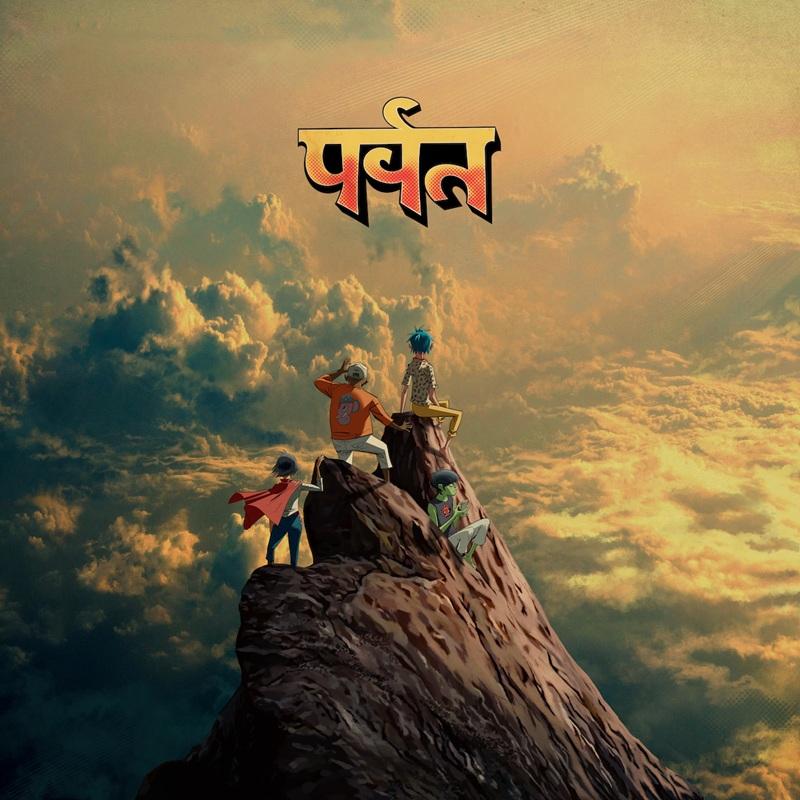

The new Gorillaz album is Damon Albarn’s most detailed and high concept to-date.
As we know by now, 25 years in, Gorillaz albums are usually defined by a theme, be that a dystopian concept, pop immediacy or the unmistakable melancholy of Damon Albarn.
The Mountain attempts to hold all three at once in what is their most ambitious effort yet; their ninth studio record is expansive yet intimate, cartoonish yet devotional: vast in both scope and sentiment.

At its heart lies the death of parents for both Damon Albarn and Jamie Hewlett. In the former’s case, Keith Albarn’s love of Hindu art and Ravi Shankar shaped the album’s spiritual direction following the Blur man scattering his ashes in Varanasi.
The result is a meditation on mortality and samsara (the cycle of life, death and rebirth) with Anoushka Shankar (daughter of the legendary Ravi) and her sitar acting as both musical guide and symbolic bridge.
At surface level, the Gorillaz narrative finds Murdoc et al retreating from fame to mystical highlands, but the real journey spanned London, Devon, New Delhi, New York and beyond.
As on Plastic Beach and Humanz the cast is vast, but unlike those earlier records the collaborators feel embedded rather than spotlighted.
Tying into The Mountain’s themes of the next life, some no longer with us such as Bobby Womack, Tony Allen, Mark E Smith and Proof are woven seamlessly into its tapestry.
Anoushka Shankar’s sitar glows with evocative warmth on the opening title-track, immediately asserting the location while ushering listeners into an album that takes its time.
The Moon Cave follows with a lithe funk groove, Albarn trading vocals with India’s Asha Puthli, Jalen Ngonda, Black Thought of The Roots and the late Dave Jolicoeur of De La Soul.
Despite their passing Albarn utilised outtakes for Womack’s croon and Jolicoeur’s abstract couplets, making them feel uncannily present, yearning for revelation.
In contrast The Happy Dictator, featuring Sparks, is brisk, sparkling pop, a supremely catchy jab at despots who insist everything is fine, satirising the absurdity of tyrants such as Kim Il-sung whose rule persists beyond death.
Elsewhere, The Hardest Thing carries the supple pulse of Tony Allen into the gorgeously melancholic Orange County, an all-time classic Albarn track and the most whistleable Gorillaz tune since On Melancholy Hill, and cut from the same cloth.
With vocals from Kara Jackson and the telling line, ‘Your legacy frightens me’, it indicates an insecurity following parental passing.
It seemed only a matter of time before two of the most collaboration-friendly artists in indie-pop found their way to one another.
It happens on The Empty Dream Machine, where Johnny Marr finally enters Albarn’s universe. The song sprawls elegantly, floating like a Bond theme by way of Wild Is the Wind, Albarn crooning his best Bowie over fluid sitar lines.
Marr also appears on the Kraftwerkian The Plastic Guru – a wry account of a Beatles-like ashram visit in Rishikesh that sours into suspicion – and The Sweet Prince.
Judging by the videos taken from the forthcoming War Child album, we can expect more from Albarn and Marr.
The Manifesto is the album’s centrepiece (in both placing and length), pairing Argentine rapper Trueno with D12’s Proof in a giddy yet righteous exchange, underscored by the sarod of siblings Amaan Ali Bangash and Ayaan Ali Bangash.
Damascus switches gear to ecstatic Arabic blip-hop with Omar Souleyman and Yasiin Bey trading verses over pulsating percussion from Viraj Acharya.
The most moving moment arrives with The Shadowy Light, uplifted by 92-year-old Bollywood legend Asha Bhosle.
Her Hindi lyric welcomes death as passage (‘Come, oh boatman…take me to the other side’) and is serene rather than morbid.
Towards the end, The Sweet Prince is a languid elegy seemingly narrating Keith Albarn’s final moments over tumbling sitar and Marr’s trademark jangle.
The closing waltz The Sad God reflects mournfully on human wastefulness, its lush instrumentation steering the record back to its overture’s spiritual vantage point.
Damon Albarn’s most detailed and high concept album to-date, The Mountain takes its time yet there is no bad track, only some that are less good.
We take Gorillaz – and by proxy Albarn – for granted; the sheer quantity of work, to say nothing of its success rate, is remarkable.
That run continues here.
Related news:
 Sleaford Mods – The Demise Of Planet X: Album Review
 Mandy Indiana – URGH: Album Review
 Fine Young Cannibals – FYC 40: Album Review
 The Durutti Column – The Return Of The Durutti Column (45th anniversary): Album Review
 AVTT/PTTN (The Avett Brothers & Mike Patton) – AVTT/PTTN: Album Review
 Babyshambles – Down In Albion (20th Anniversary Edition): Album Review
 The Cribs – Selling A Vibe: Album Review
 Suede live at Bristol Beacon: Gig Review